

Whoa Nelly!
A book critic's take on Emerald Fennell’s subversive "Wuthering Heights"


[This piece contains basic plot spoilers for Wuthering Heights.]
A common opening refrain of legends and folktales from across the world is some variation on the following: There was, or there was not… Tales that begin this way are warning the listener not to take literally what they are about to hear. Equally as common, legends preface themselves: This was told to me by my sister, who heard it from a friend, who witnessed it firsthand… How much of what is about to be heard is true? Regardless, the listener is soon to be too enraptured to worry about which Frankensteinian version of this legend has survived the years.
But there is a risk to get caught up in debating what is “true” about a story that loves to be told, and told again. Stories are vulnerable things; they hold the potential to be immortal, but also still vulnerable to bastardization through translation from one medium to another. This is true of fables, folklore, and like it or not, classic literature.
Wuthering Heights is a story particularly irresistible to filmmakers yet so obviously ill-suited to the medium of film. A truthful and exact retelling of Wuthering Heights would be like some ridiculous, gothic version of 1986 children’s film The Adventures of Milo and Otis (IYKYK) with Nelly narrating the entire film to the idiot Lockwood. But is the joy of adaptation in line-by-line symmetry between mediums? Or is it instead in how a filmmaker can manifest and expound upon certain elements from the source material onscreen? Many a Letterboxd review would argue the former, but the box office says it all.
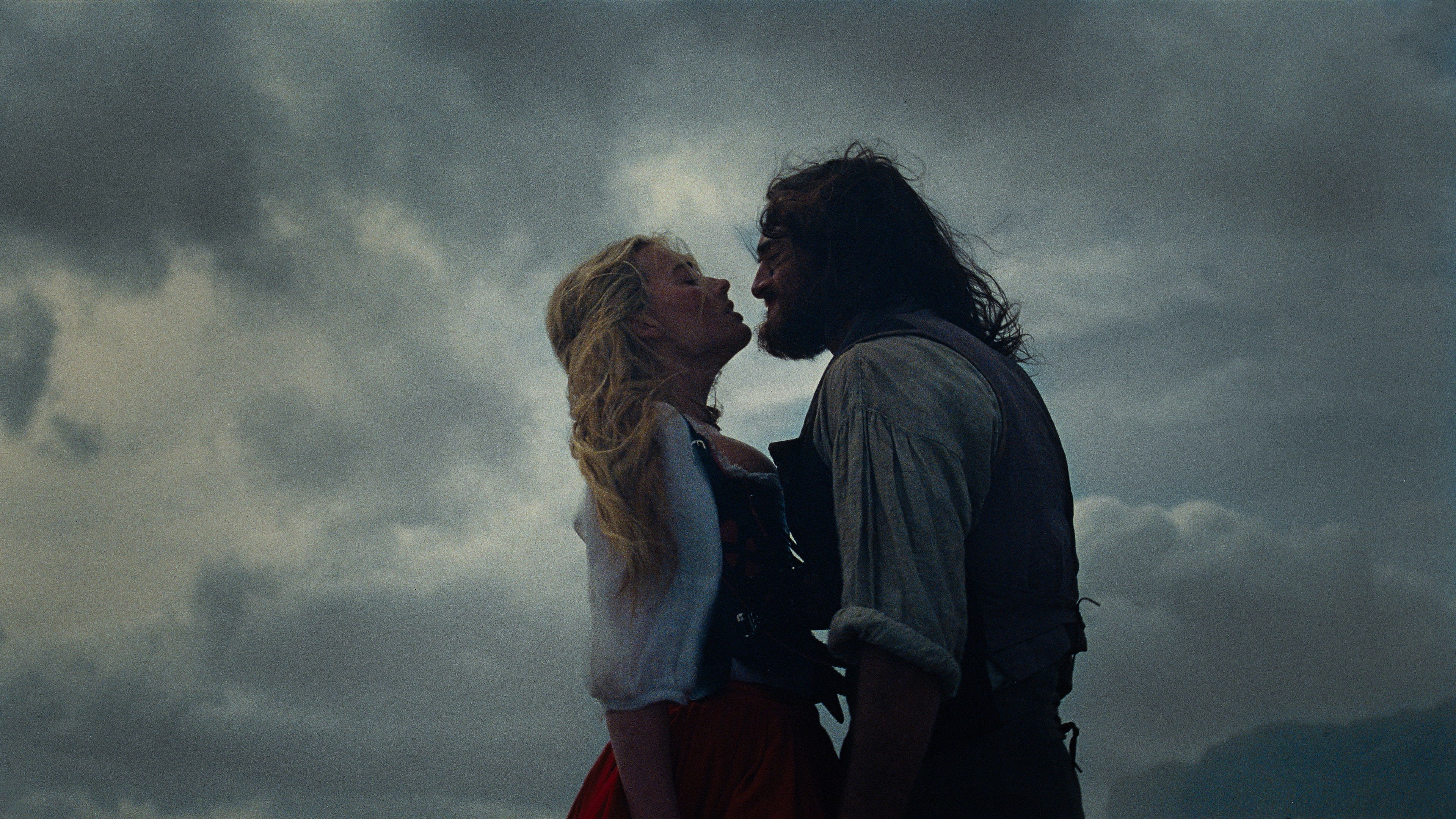
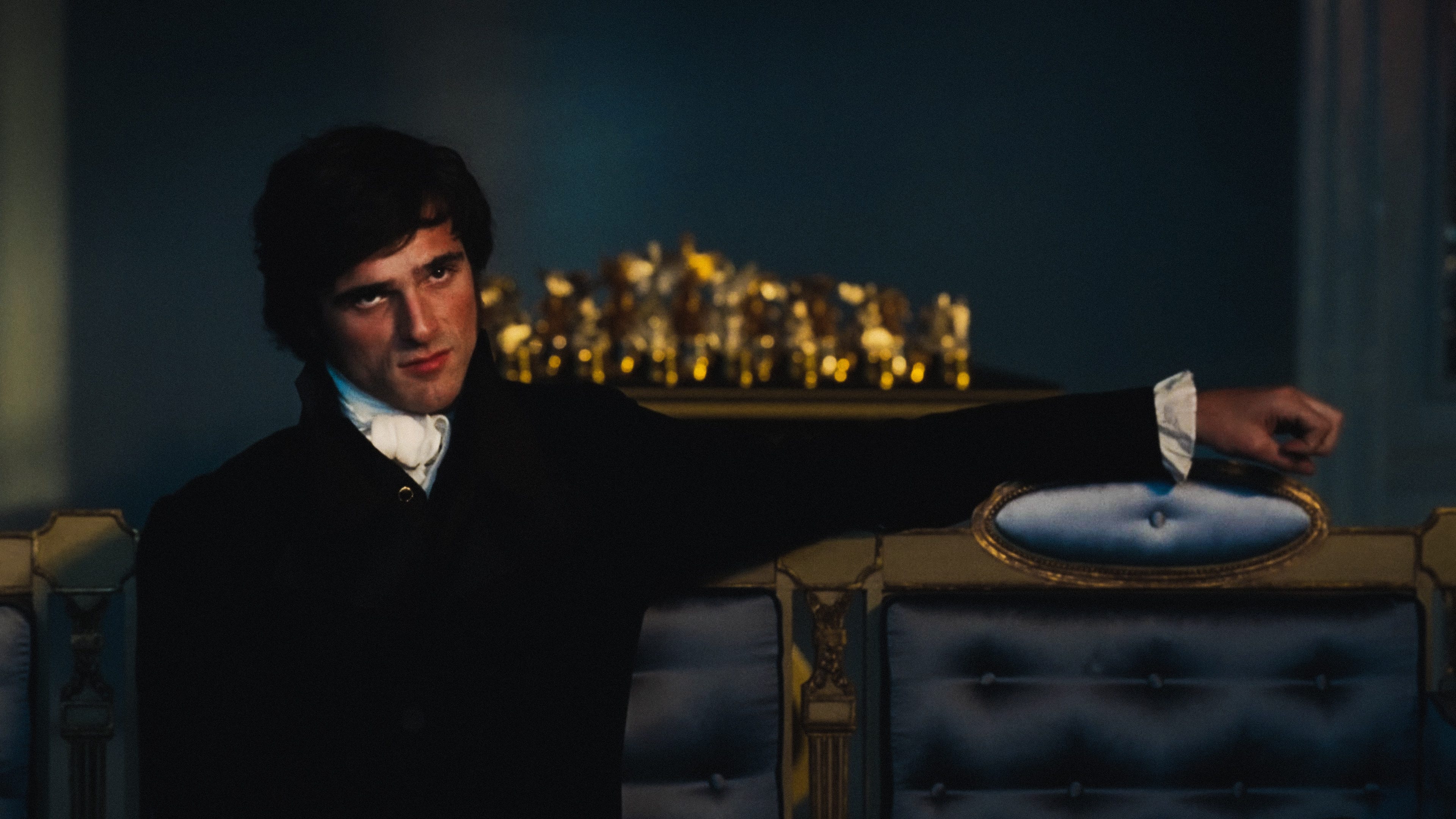
Emerald Fennell’s adaptation, stylized as “Wuthering Heights,” is stunning. The gothic sister of Yorgos Lanthimos’s Poor Things, it is nothing less than a visual feast. The moors of Yorkshire are given their routine reverence, thanks to gorgeous cinematography by Linus Sandgren. Fennell and set designer Suzie Davies have done something miraculously different here by rendering the old Earnshaw farmhouse of Catherine (Margot Robbie) and Heathcliff’s (Jacob Elordi) youth into something out of a dream. Fennell may have eschewed the literal ghosts present in Brontë’s novel, but the house itself is some chthonic monster, wedged between jagged crags, creaking and glimmering with otherworldly things. All the while, Jacob Elordi flexes his ginormous muscles and mumbles “Cath…,” amongst other things, in a perfectly unintelligible Yorkshire accent, and Margot Robbie looks perhaps less savage than Brontë’s Catherine, but very much like someone who is trying, and failing, to be good.
So where lies the issue? Why do the “literature girlies” rage and froth at the mouth while Emily Brontë’s latest biographer approves, and the professionals at the Brontë home and museum in Haworth, England offer a “stout defense of the film, calling it ‘amazing,’ ‘exciting’ and ‘fantastic?’”
Wuthering Heights is a legendary novel written by Emily Bronte and published in 1847 under a male pseudonym. The novel’s initial reception (coinciding with the last few months of Brontë’s life) was that of overwhelming criticism that the novel was immoral, dark, unnatural and profane. (Emerald Fennell licks her lips.)
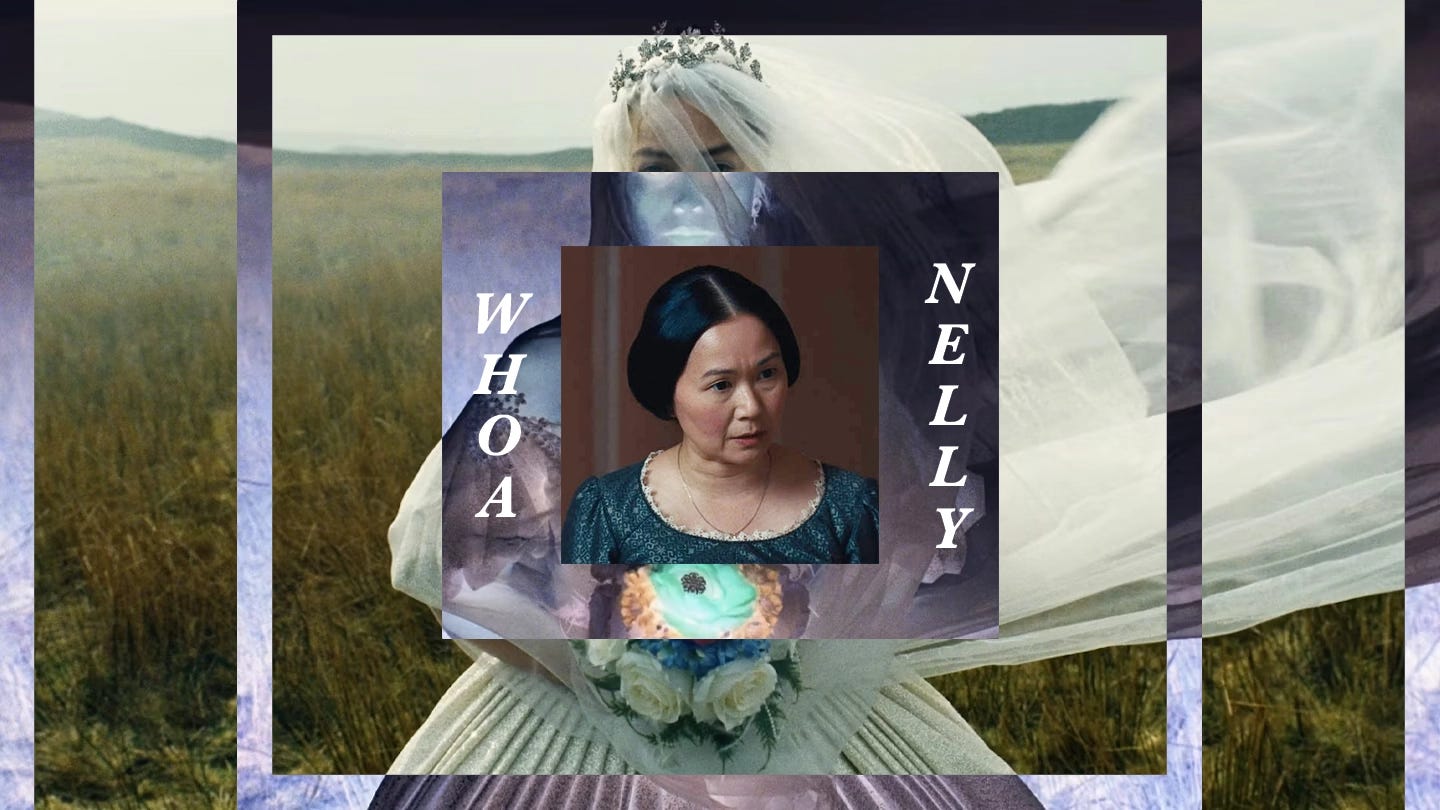
The novel opens with a weird scene on an evening of savage weather in the moors of northern England. Lockwood, a new tenant of a nearby Yorkshire home called Thrushcross Grange has a deranged experience with the odd family residing in Wuthering Heights, an upland farmhouse. When returning home to the Grange after a disturbing night full of paranormal activity, he falls ill, and for the next 2/3rds of the book, the reader listens to the story of the Earnshaw and Linton families as told to a recovering Lockwood. The orator of this epic tragedy is none other than Ellen “Nelly” Dean (Hong Chau), a ward of the Earnshaw family whose narration to the entranced Lockwood is based on her own experience growing up with them. Nelly sits fireside with Lockwood, knitting, as the wild weather of the moors rages outdoors, and is more than happy to oblige when Lockwood’s curiosity gets the best of him—the new tenant assuring Nelly that it will be “a charitable deed” to tell him the decades-long story of his neighbors, and how the man Heathcliff came to reside there. Nelly seizes her opportunity to “set the record straight.”
The first of Fennell’s unorthodoxy that the literary movie-goer picks up on is that there is no Lockwood. Instead of the above, the film opens with a slightly erotic public hanging, and something almost more troubling: Nelly and Catherine’s childhood companionship. Where the hell is Hindley?
In the book and every other adaptation, Hindley is Catherine’s older brother who grows up with Nelly as his foster-sister. He resents Heathcliff and terrorizes him throughout childhood and is critical, later, to Heathcliff gaining control of the Earnshaw inheritance. Dissolving him partially into Catherine and her father Mr. Earnshaw (Martin Clunes) is a pretty radical departure from the canon that no other adaptation has risked. Yet, here, in a film that—like every one of its sisters—does not cover the second half of the book, it is a smashing success.
An archetypal reading of Wuthering Heights could propose that Hindley and he and Catherine’s father, Mr. Earnshaw, represent two conflicting sides of man’s psyche. Where Hindley is the interior, instinctual and animal part of man, Mr. Earnshaw is the exterior: idealistic and lofty. Hindley has a strong sense of loyalty to blood relations and an, albeit skewed, morality, whereas Mr. Earnshaw is pious, yet vulnerable to whims of passing emotions. Instead of this dichotomy of these two quintessential characters, Fennell’s “Wuthering Heights” offers a character trio that absorbs the role of Hindley. The father, and the two women: Nelly and Catherine.
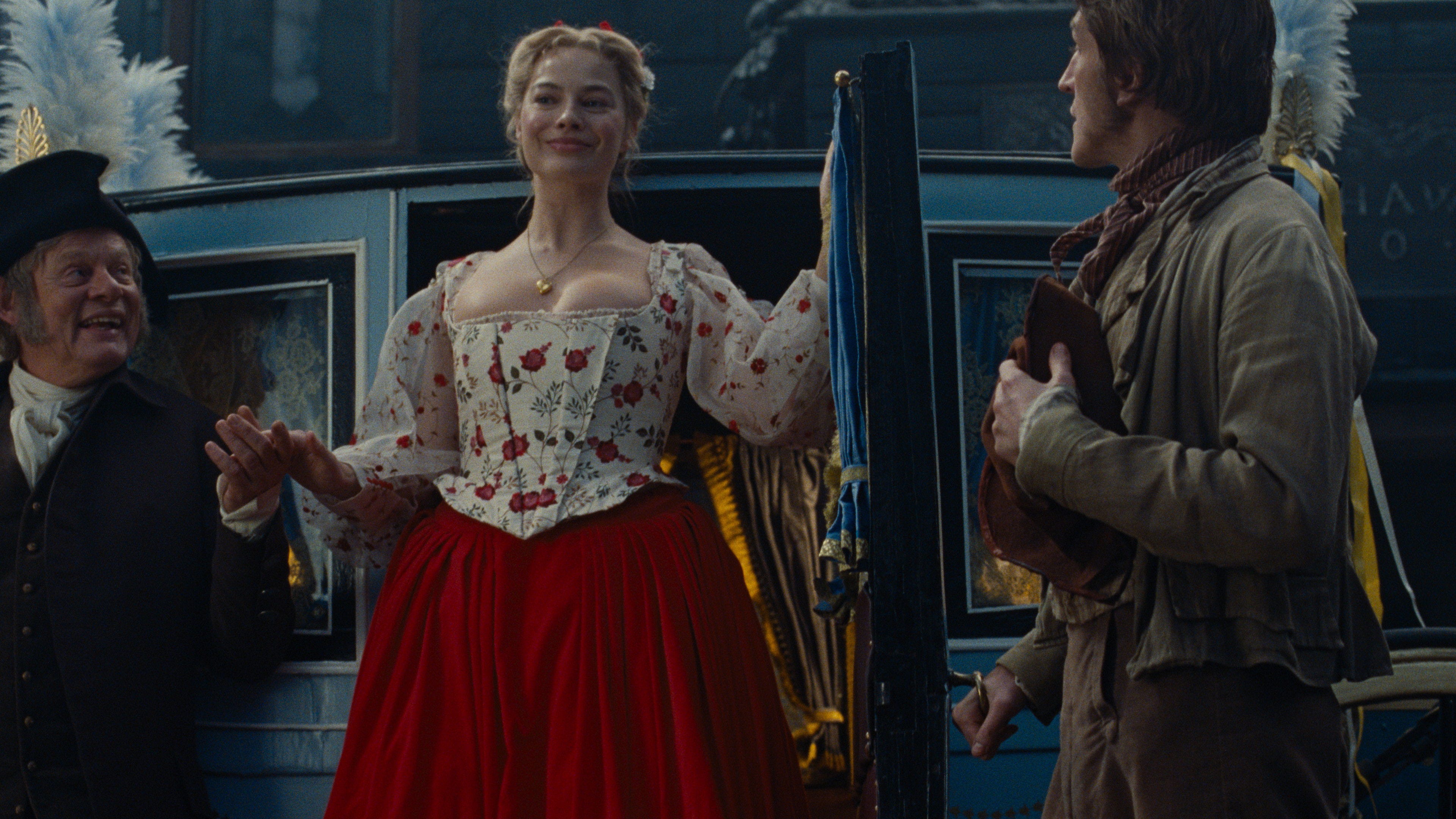
Given the signature lack of characterization that makes Wuthering Heights a challenge to follow at times, this is not only a valid reading but a potential improvement. It creates an almost mythological feeling in Emily’s novel that her male side characters are highly representative and represent base, singular motives; they are totally unreal. The farmhand Joseph (Ewan Mitchell) is almost purely archetypal as the self-righteous Christian, Hindley as an abused abuser, Edgar Linton (Shazad Latif) as a dispassionate bourgeoisie, Mr. Earnshaw as a idealist type, etc. In the many adaptations that only cover the first half of the book, Brontë’s vision for these characters tends to fall flat.
Visualizing Nelly and Catherine growing up in companionship with each other, unlocked many emotional intricacies of the novel for me. It was an epiphany for me to see the relationship of these two women put in the spotlight in a way that no other adaptation has bothered. Nelly too often fades into the background of the big screen as the person who witnessed this tragedy unfold, yet in Fennell’s movie, she is finally given the appreciation she deserves as a keystone to this story. Nelly is not just a meddlesome, nagging woman, she is as wickedly clever as Catherine, and her actions have disastrous consequences that span generations. Yet, she is often relegated to the sidelines. Chau is incredible in her restraint as a powerful, influential Nelly. And while I don’t find it entirely acceptable that Heathcliff is not pictured as non-white in this adaptation as he is described in the book, his internalized rejection of being othered is brilliantly exhibited instead by Chau’s Nelly. Her early wounds that fester to bitterness resonate strong in this film, further illuminating literary Nelly’s insistence in her own history of what actually happened at Wuthering Heights.
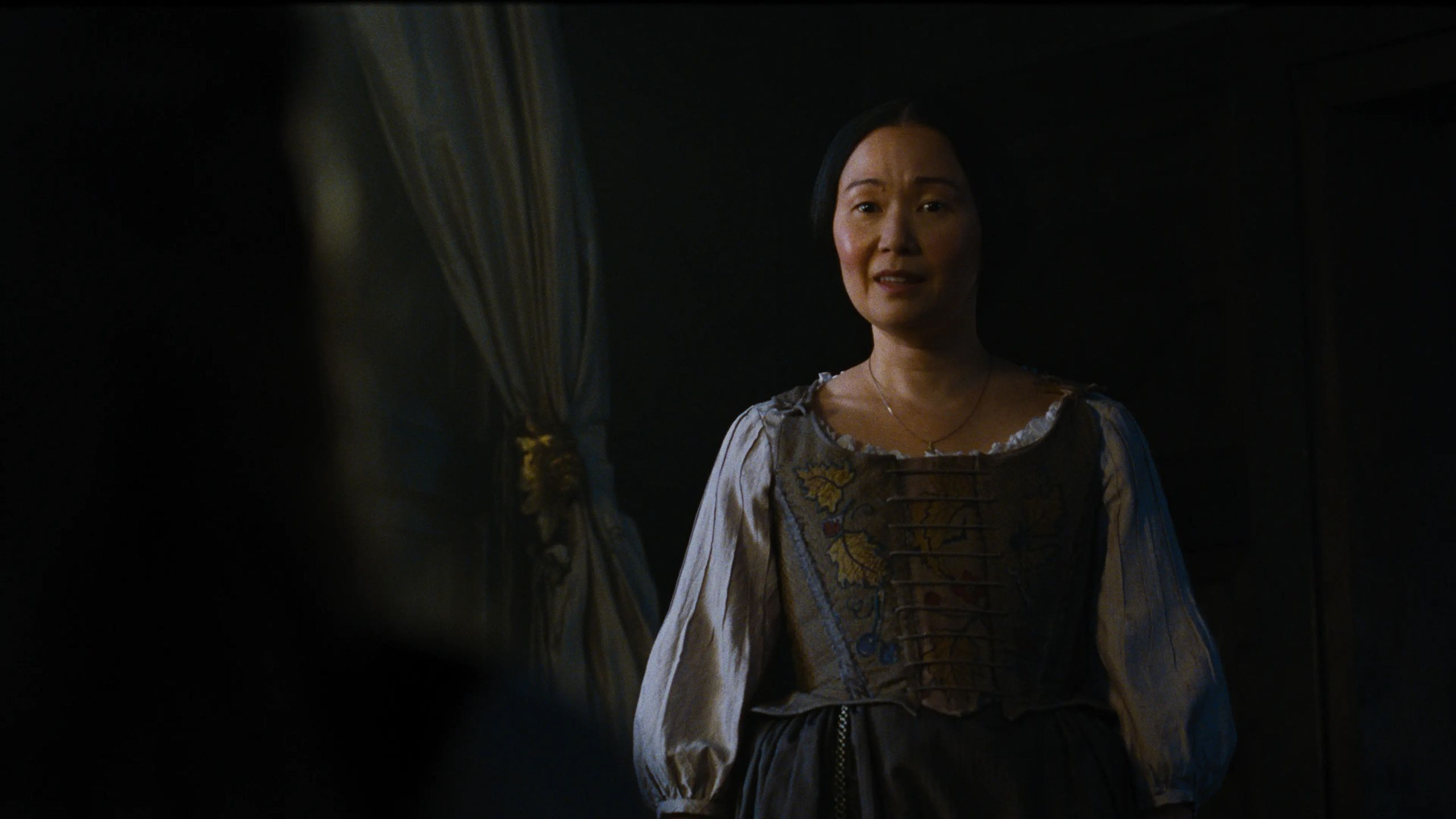
Sadly, lost in this familial re-shuffling is one of the book’s most beautiful lines between a young Catherine and her father1 but still, does Catherine’s complicated love for her abusive father not come through in the same way? And later, as a consequence of removing Hindley, is there no opportunity to show Nelly’s utter devastation at witnessing the death of the friend she grew up alongside? No, her grief is given powerful context through Fennell’s alternate universe.
The emotional stakes of these relationships were put at the forefront of Fennell’s version. To her, anything that interfered with clearly articulating the characters’ devouring, Byronic entanglements was severed without hesitation.
I find it tedious that Brontë’s sole novel seems to have never been able to shake the original heckling that plagued it upon its reception all those years ago. That this is solely an immoral tale of selfish people incapable of love. The readers who see any interpretation of Wuthering Heights as a romantic tragedy as blatantly incorrect must hold its literary merits in quite a bit of disdain. Wuthering Heights is a romance, although it doesn’t really feel like it when you’re a 13 year old reading it in English class. It wasn’t until I read Wuthering Heights in my twenties that I saw its dark, alchemical expression of passion as something familiar and realistic. A love so deep it seems at times like hatred; childhood wounds so buried they turn cancerous. Andrea Arnold’s bleak adaptation expresses only this interpretation. Her 2011 Wuthering Heights forswears Catherine and Heathcliff’s love as something exclusively toxic and rageful; Fennell savors swinging far in the other direction.
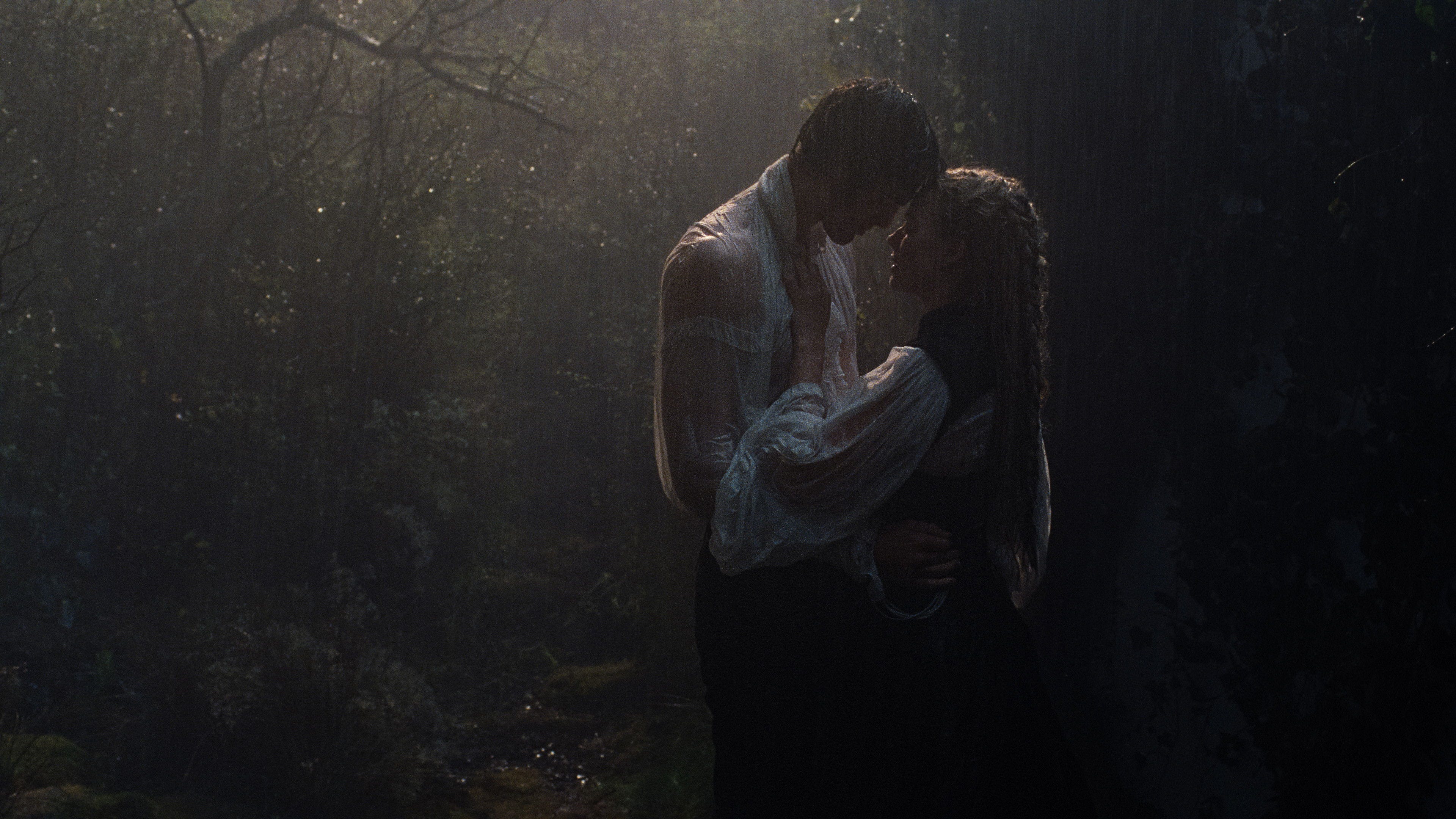
Once connecting with the repositioning of Nelly and Catherine’s relationship (which hits early in the film) I, personally, was all in for whatever else Fennell could bring to life that feels under-explored cinematically. Primarily, she explores a sexual relationship between Heathcliff and Catherine during the time in which Heathcliff returns to Wuthering Heights after becoming mysteriously wealthy. This includes a lot of sex in the moors. Does any part of this not feel thematically true to Wuthering Heights? Possibly to you, but to me, I loved this rendition that dared to show what Cathy and Heathcliff’s world outside of Nelly’s ever-watchful eye looked like. Perhaps this was what Emily Brontë was alluding to all along—that Nelly’s jealousy and rejection of Heathcliff and Catherine’s love extended so far as to write their consummation out of her retelling to Lockwood. All I know, is that in my next re-read of Wuthering Heights (I’ve lost track at this point) I’ll be taking a little closer look at what that wily Nelly has to say in her version of the story, for we all know how things can get lost in translation.
Wuthering Heights is playing at various locations, including Nickelodeon Cinemas, Portland, Flagship Cinemas (Falmouth, Auburn, Thomaston, Waterville, Wells), Smitty’s Cinemas (Topsham, Windham, Sanford), Maine Film Center, Waterville, Regal Augusta, Apple Cinemas (Westbrook, Saco), Black Bear Cinemas, Orono, and more.
Did you enjoy reading this article? Consider chipping in $5 (or more!) to The Maine Playweek to support our mission.
Miss Cathy had been sick, and that made her still; she leant against her father's knee, and Heathcliff was lying on the floor with his head in her lap. I remember the master, before he fell into a doze, stroking her bonny hair - it pleased him rarely to see her gentle - and saying, “Why canst thou not always be a good lass, Cathy?” And she turned her face up to his, and laughed, and answered, “Why cannot you always be a good man, father?”